The 2026 RORO Market: Why Fleet Expansion Creates Opportunity for Vehicle Exporters
Introduction
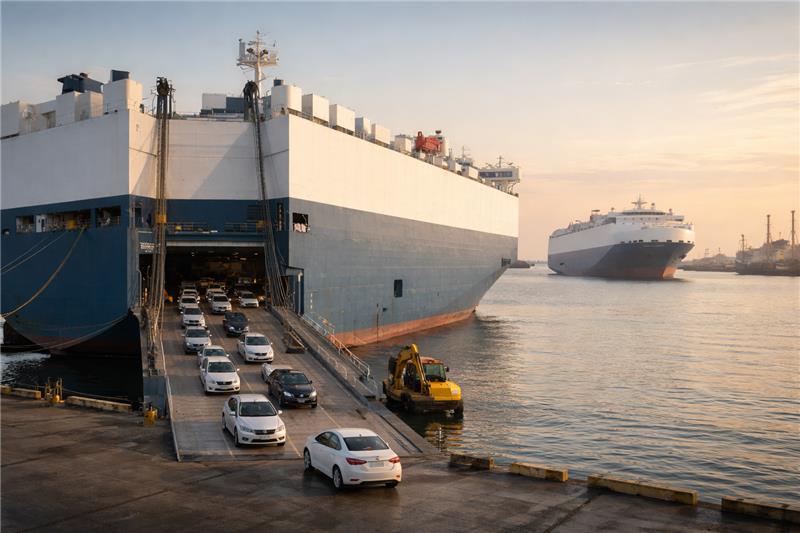
The global Pure Car Carrier (PCC) and Pure Car and Truck Carrier (PCTC) fleet is forecast to expand by approximately 40% over the coming years, with 58 new RORO vessels delivering in 2026 alone, expanding capacity by 5-7%. Over 22 million vehicles were transported using RORO vessels in 2023, reflecting increased demand from automotive OEMs and industrial equipment manufacturers, with global automotive exports growing 8.5% that year. Latest-generation PCTCs are designed to carry 20-30% more car-equivalent units (CEUs) than legacy tonnage, lifting individual vessel capacity into the 9,000+ CEU range, with most new-builds being dual-fuel or alternative-fuel capable. For U.S. vehicle exporters, auto dealers, and auction buyers, this capacity expansion creates opportunities—but success requires partnering with experienced RORO specialists who maintain carrier relationships, understand export compliance, and coordinate the auction-to-destination logistics that differentiate professional operations from commodity brokers.
Three Factors Shaping the 2026 RORO Market
1. Fleet Capacity Growing Faster Than Cargo Demand
The defining feature of 2026's RORO market is straightforward: fleet growth is outpacing cargo growth. Approximately 58 new RORO and PCTC vessels are scheduled for delivery during 2026, expanding global capacity by an estimated 5-7%, while global finished vehicle trade is expected to increase by only 1-3%, constrained by softer automotive sales, uneven regional recovery, and trade policy friction.
This capacity surplus shifts dynamics in ways that smart exporters can capitalize on. Long-term contracts continue to provide earnings visibility, with more than 80% of 2026 capacity already secured under multi-year deals. While this means most capacity is pre-allocated, it also creates predictability for exporters with carrier relationships—falling charter rates mean operators can add temporary capacity more affordably, reducing the risk of bottlenecks.
Latest-generation PCTCs entering service aren't just incremental improvements. Grimaldi Group's seventh ammonia-ready PCTC offers approximately 9,241 CEU capacity with reinforced decks capable of handling rolling units up to 250 tonnes and heights of around 6.5 meters. These specifications matter because they absorb cargo traditionally moved by multipurpose ships, creating routing flexibility across vehicle categories from passenger cars to construction equipment.
2. Strong Underlying Demand Fundamentals
Despite capacity expansion, underlying RORO demand remains robust. In 2023 alone, more than 22 million vehicles were transported using RORO vessels. Japan shipped over 3.5 million vehicles using RORO services, while countries like South Korea, Japan, and Germany collectively exported more than 9 million vehicles using RORO vessels.
Construction and forestry equipment shipments recorded year-on-year growth exceeding 25% in recent quarters, driven by infrastructure spending and large-scale industrial projects. Power-generation equipment volumes also strengthened, with segment revenues rising approximately one-third, reflecting accelerating demand from data centers and energy infrastructure.
Emerging markets present major opportunities. India's port authorities approved $2.1 billion in infrastructure upgrades in 2023, adding 5 new RORO berths along the western coast. Vietnam's vehicle imports rose 15%, prompting shipping companies to launch new routes between Southeast Asia and the Middle East expected to handle over 3 million CEUs annually by 2026. The African Continental Free Trade Area (AfCFTA) is fostering cross-border trade, with 6 new RORO projects funded by $900 million in public-private partnerships.
3. U.S. Export Growth in Key Segments
U.S. outbound RORO is picking up in two areas: construction equipment to Latin America and military hardware to allied nations. There's also quiet growth in used car exports to Africa and the Middle East, particularly through Gulf Coast terminals.
The Port of Veracruz completed a major RORO terminal expansion in Q4 2024, increasing berth capacity by 20% and reducing vessel dwell time by an average of 16 hours, demonstrating infrastructure improvements supporting regional vehicle export growth.
Why RORO Export Requires Specialized Expertise
RORO shipping involves operational complexity that commodity brokers cannot navigate effectively.
Carrier relationships matter. While overall capacity is expanding, specific routes and departure dates still face allocation challenges. More than 80% of 2026 capacity is already secured under long-term contracts. Exporters working with established RORO forwarders access priority allocations through existing carrier partnerships.
Documentation must be precise. RORO exports require clean titles, bills of sale, export certificates, and destination-specific documentation. Linear Shipping's FMC licensing ensures documentation meets exact regulatory standards.
Auction coordination demands infrastructure. Efficient vehicle export requires seamless coordination from auction houses like Copart, IAAI, and Manheim through title processing to vessel loading. This requires operational infrastructure and logistics experience.
How Linear Shipping Serves RORO Exporters
Linear Shipping operates as an FMC-licensed NVOCC with established carrier relationships and specialized automotive logistics capabilities.
Used Car Export Services
Linear Shipping provides complete vehicle export services:
- Auction Pickup: Coordination with Copart, IAAI, Manheim, and other major auction houses for vehicle retrieval and transport to port facilities.
- Title & Documentation Processing: Handling of export compliance including title transfers, bills of sale, and destination-specific certificates.
- RORO and Container Loading: Professional loading services for both RORO shipments of running vehicles and container methods for non-running or high-value automobiles.
- Export Compliance: FMC-licensed operations with knowledge of U.S. export regulations and international automotive import standards.
Heavy Equipment Capabilities
Beyond passenger vehicles, Linear Shipping handles heavy and oversized cargo:
- RORO Shipping: Access to PCTC vessels for construction equipment, agricultural machinery, and industrial rolling stock.
- Flat Rack Containers: Alternative loading solutions for equipment requiring weather protection during ocean transit.
- OOG (Out-of-Gauge) Cargo: Handling for oversized loads requiring custom securing.
Operating Credentials
Linear Shipping maintains:
- FMC-licensed NVOCC status meeting U.S. regulatory standards for ocean transportation
- Global network spanning 180+ countries
- Direct carrier relationships with major RORO lines
- C-TPAT certification for security compliance
Practical Considerations for 2026
- Understand capacity allocation. With 80% of 2026 RORO capacity already secured under long-term contracts, working with forwarders who have established carrier relationships provides access to allocated space.
- Target growing markets. New RORO routes to Southeast Asia, Middle East, and Africa create export opportunities, particularly for used vehicles and construction equipment.
- Plan for compliance requirements. U.S. export regulations and destination country import requirements demand proper documentation and FMC-licensed operations.
Frequently Asked Questions
Why is RORO shipping capacity expanding in 2026?
The global PCTC fleet is forecast to expand approximately 40% over coming years, with 58 new vessels delivering in 2026 alone, expanding capacity 5-7% to meet sustained vehicle export demand.
How many vehicles are shipped via RORO annually?
Over 22 million vehicles were transported using RORO vessels in 2023, with Japan shipping over 3.5 million vehicles and global automotive exports growing 8.5% that year.
What types of cargo can RORO vessels handle?
RORO vessels transport passenger cars, trucks, SUVs, construction equipment, agricultural machinery, and rolling industrial cargo. New vessels with reinforced decks handle units up to 250 tonnes.
Why is FMC licensing important?
FMC (Federal Maritime Commission) licensing ensures freight forwarders meet U.S. regulatory standards for ocean transportation and maintain proper compliance for international shipments.
What is required for vehicle export from the U.S.?
Vehicle exports require clean titles, bills of sale, export certificates, and destination-specific documentation that varies by country.
Does Linear Shipping handle auction vehicle pickups?
Yes—Linear coordinates directly with Copart, IAAI, Manheim, and other major auction houses for vehicle retrieval and transport to port facilities.
Partner with Experienced RORO Specialists
The 2026 RORO market presents opportunities driven by fleet expansion, sustained vehicle export demand, and emerging market growth. Success requires carrier relationships, compliance expertise, and operational infrastructure.
Linear Shipping operates as an FMC-licensed NVOCC with established carrier relationships, nationwide auction pickup services, comprehensive documentation handling, and a global network spanning 180+ countries.
Whether you're exporting used vehicles to international markets, shipping construction equipment, or exploring RORO services, Linear Shipping provides the carrier access, compliance credentials, and operational capabilities that professional vehicle export demands.
Contact Linear Shipping today.